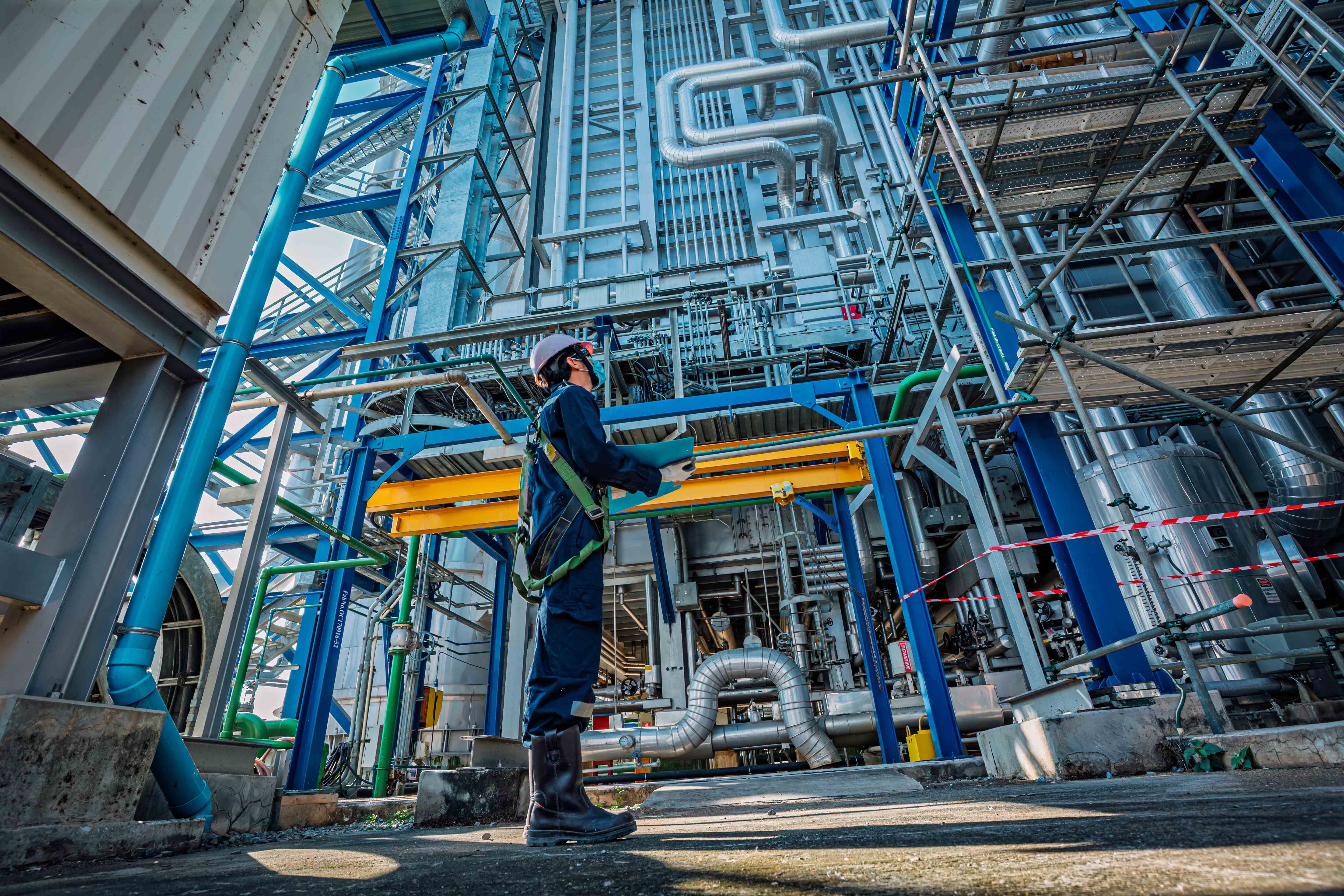
Texas mechanical flushing services

Mechanical Flushing Services for Hydronic Systems in Texas

PurgePro performs high-velocity mechanical flushing on hydronic, chilled water, and heating loops across Texas — removing construction debris, sediment, scale, and corrosion byproduct before they cost you efficiency, equipment, or a commissioning sign-off. Every job closes out with a documented flush report your engineer, GC, or owner can file.

- [GPM] — flow capability
- Statewide — Texas coverage
- [hrs] — typical mobilization
- 100% — jobs documented
Trusted on Texas commercial & industrial systems
Mechanical Flushing Explained

What is mechanical flushing?

Mechanical flushing is the process of circulating water through a piping system at high velocity to physically dislodge and carry out debris, sediment, mill scale, weld slag, pipe dope, and corrosion byproduct. Unlike chemical cleaning, which dissolves deposits, mechanical flushing relies on flow velocity and turbulence to scour the interior pipe wall and transport loosened material to a filtration point where it is captured and removed from the system. In commercial HVAC, mechanical flushing is performed on hydronic heating loops, chilled water loops, condenser water loops, and process piping — either before a new system is commissioned or after an existing system has accumulated fouling in service.
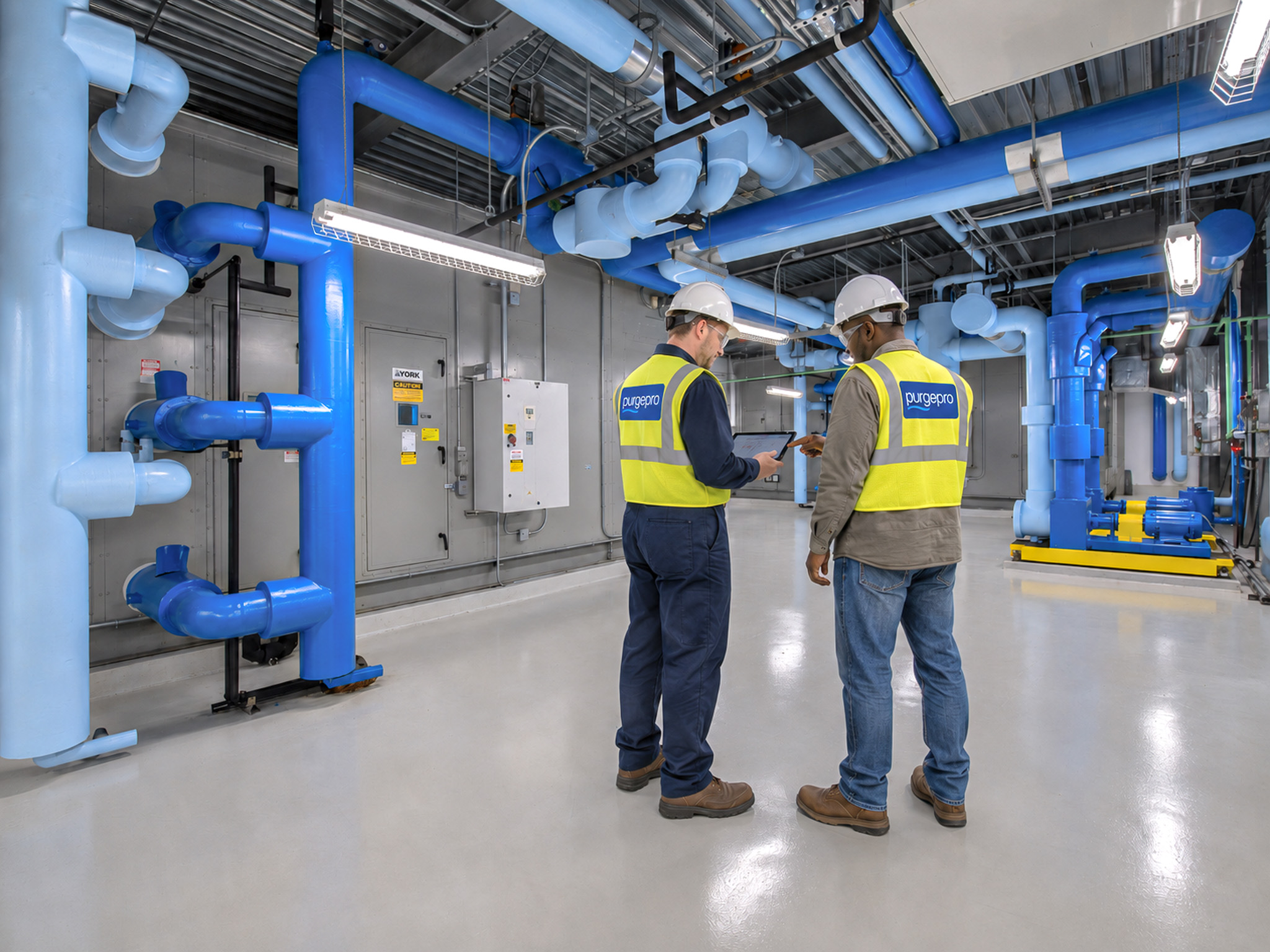
Flushing Experts

When mechanical flushing is required

Mechanical flushing shows up in two very different situations — one planned, one unplanned

Existing systems in service

Older loops foul. Makeup water carries minerals. Oxygen ingress drives corrosion. Failed treatment programs allow biological growth. Sediment settles into low points and dead legs, and over enough years the loop is carrying a measurable load of suspended and settled solids that never gets removed by normal strainer maintenance.
Signals an existing loop needs flushing:
Service-details-process-list-tick-icon
Coils or heat exchangers not making design delta-T
Service-details-process-list-tick-icon
Strainers loading up faster than they used to
Service-details-process-list-tick-icon
Discolored, cloudy, or particulate-heavy system water
Service-details-process-list-tick-icon
Pump seal or bearing failures at abnormal frequency
Service-details-process-list-tick-icon
Control valves sticking or failing to seat
Service-details-process-list-tick-icon
Chillers or boilers short cycling on approach temperature
Service-details-process-list-tick-icon
Water treatment vendor reporting high total suspended solids
Service-details-process-list-tick-icon
Uneven heating or cooling across zones served by the same loop

New construction and pre-commissioning

Every new hydronic system contains material that was never supposed to be there. Cutting oil from the pipe mill. Weld slag from field joints. Thread-cutting debris and pipe dope. Sand, drywall dust, and insulation fiber from an open construction site. Rust that formed in the pipe while it sat in a lay-down yard through a Gulf Coast summer.If that material is still in the loop when the system starts up, it goes straight into the equipment the owner just paid for. Most mechanical specifications — commonly written into Division 23 hydronic piping and commissioning sections — require the system to be cleaned and flushed, with documentation, before chemical treatment is introduced and before the system is turned over. Missing that step is one of the more common reasons a commissioning agent will refuse a turnover package.
Signals you need a pre-commissioning flush:
Helmet line icon dark
Spec language requiring cleaning and flushing prior to system startup
Document line icon dark
Commissioning agent requesting flush documentation
Protected line icon dark
Chemical treatment vendor requiring a clean loop before introducing inhibitor
Document line icon dark
Warranty terms conditioned on documented system cleaning
PurgePro — Process
Our process

How PurgePro performs a mechanical flush

Every flush follows the same sequence. Loop volume, pipe diameter, contamination load, and what has to stay in service determine the timeline.

01 / 06 Assessment and flush plan
STEP 01

Assessment and flush plan

We review the piping schematic and the loop on site — volume, pipe sizes, isolation points, low points, dead legs, and any equipment that needs bypassing.

We confirm fill and drain capacity, discharge routing, power, and access, then phase the work around whatever has to stay running.

You get a flush plan: segments, sequence, connections, and estimated duration.

STEP 02

Isolation and temporary connections

Coils, chillers, heat exchangers, and control valves are isolated or bypassed rather than flushed through. Strainers are pulled so they don't blind off mid-flush.

Temporary pumping is sized to hit scouring velocity in the largest pipe in the segment, with filtration sized for the expected debris load.

Flushing through a coil bundle is how a flush turns into a plugged coil.

STEP 03

High-velocity flush

Water circulates at velocity sufficient to suspend and carry settled debris, with flow reversed where the piping allows — material that packs against a fitting under forward flow often releases under reverse.

We work mains first, then branches, then terminal runs, keeping debris moving toward filtration. Each segment runs until filtration stops loading and discharge runs clear.

STEP 04

Verification

Flow and clarity are confirmed segment by segment. Depending on the spec, verification can include:

  • Visual clarity checks
  • Filter media inspection and change-out logging
  • Water sampling for suspended solids and turbidity
  • Flow and differential pressure readings
  • Post-circulation strainer inspection
STEP 05

Restoration

Temporary connections come out, permanent piping goes back, strainers are cleaned and reinstalled, and the loop is refilled and vented.

On pre-commissioning work we hand off directly to your water treatment vendor and commissioning agent.

STEP 06

Flush report

Every job closes with a written report — not a verbal confirmation, not a line on an invoice.

What's in a PurgePro flush report

Nine items, on every job, every time.

01Segments flushed against the drawings
02Pre-flush conditions
03Methodology, sequence, and duration
04Flow rates and velocities achieved
05Filtration used and debris observed
06Verification results
07Post-flush status at turnover
08Photo documentation
09Date, crew, and sign-off

That's what your engineer files, what your CxA needs for turnover, and what you produce two years later when someone asks whether the system was ever actually cleaned.

SYSTEMS WE FLUSH

Systems PurgePro flushes

01
Chilled water loops

primary, secondary, and primary-secondary distribution serving air handlers, fan coils, and terminal units.

02
Heating hot water loops

boiler-fed distribution serving reheat coils, radiant, and terminal heat.

03
Condenser water loops

cooling tower to chiller condenser piping, including bypass and sidestream legs.

04
Process cooling piping

equipment-specific cooling loops in industrial and manufacturing facilities.

05
Dual-temperature loops

changeover systems running chilled water and hot water seasonally.

06
Glycol systems

freeze-protected loops requiring flush prior to recharge.

07
Central utility plant distribution

campus and district piping between plant and building interfaces.

08
Makeup and fill piping

supply-side piping feeding the loop.